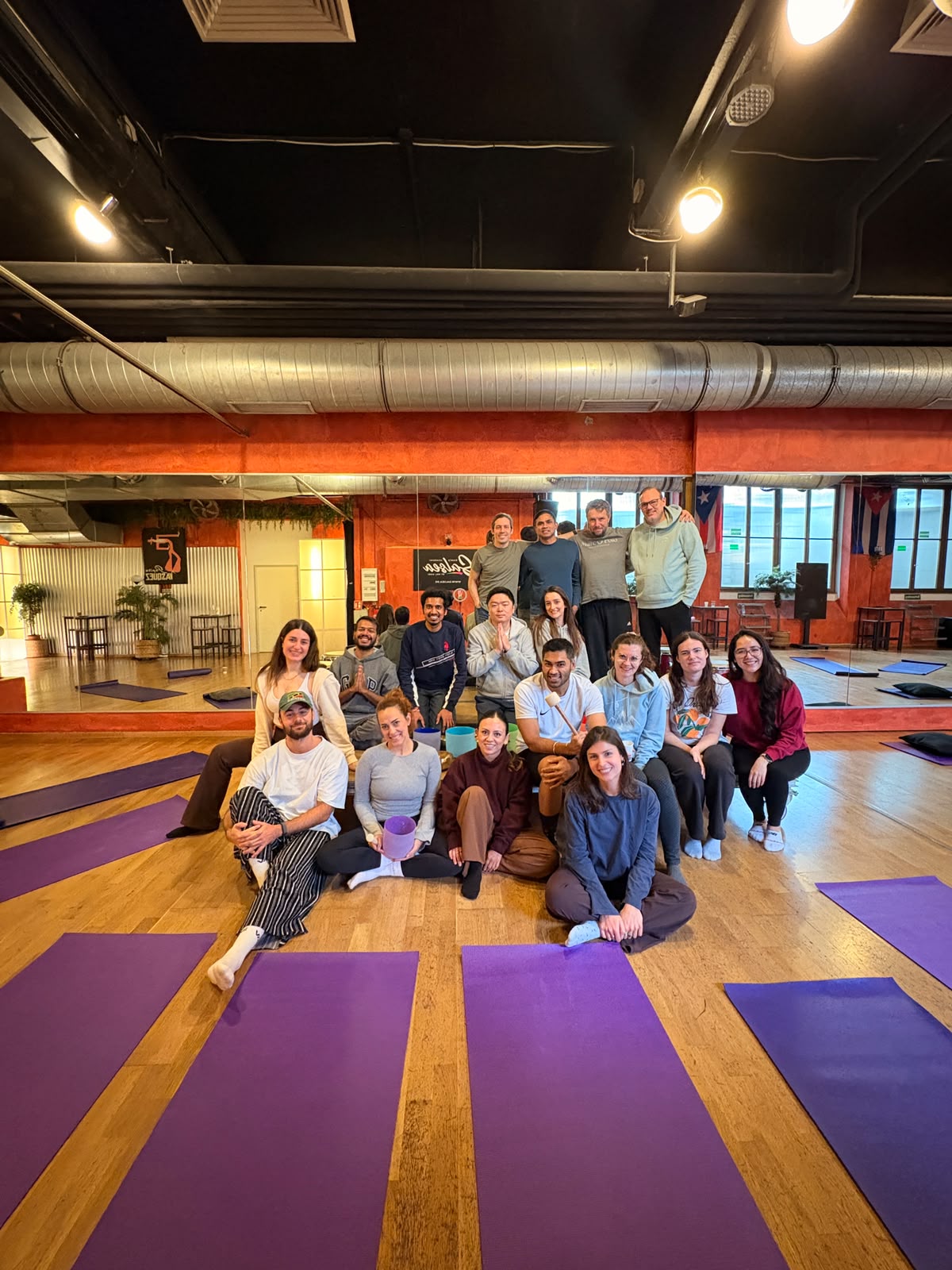
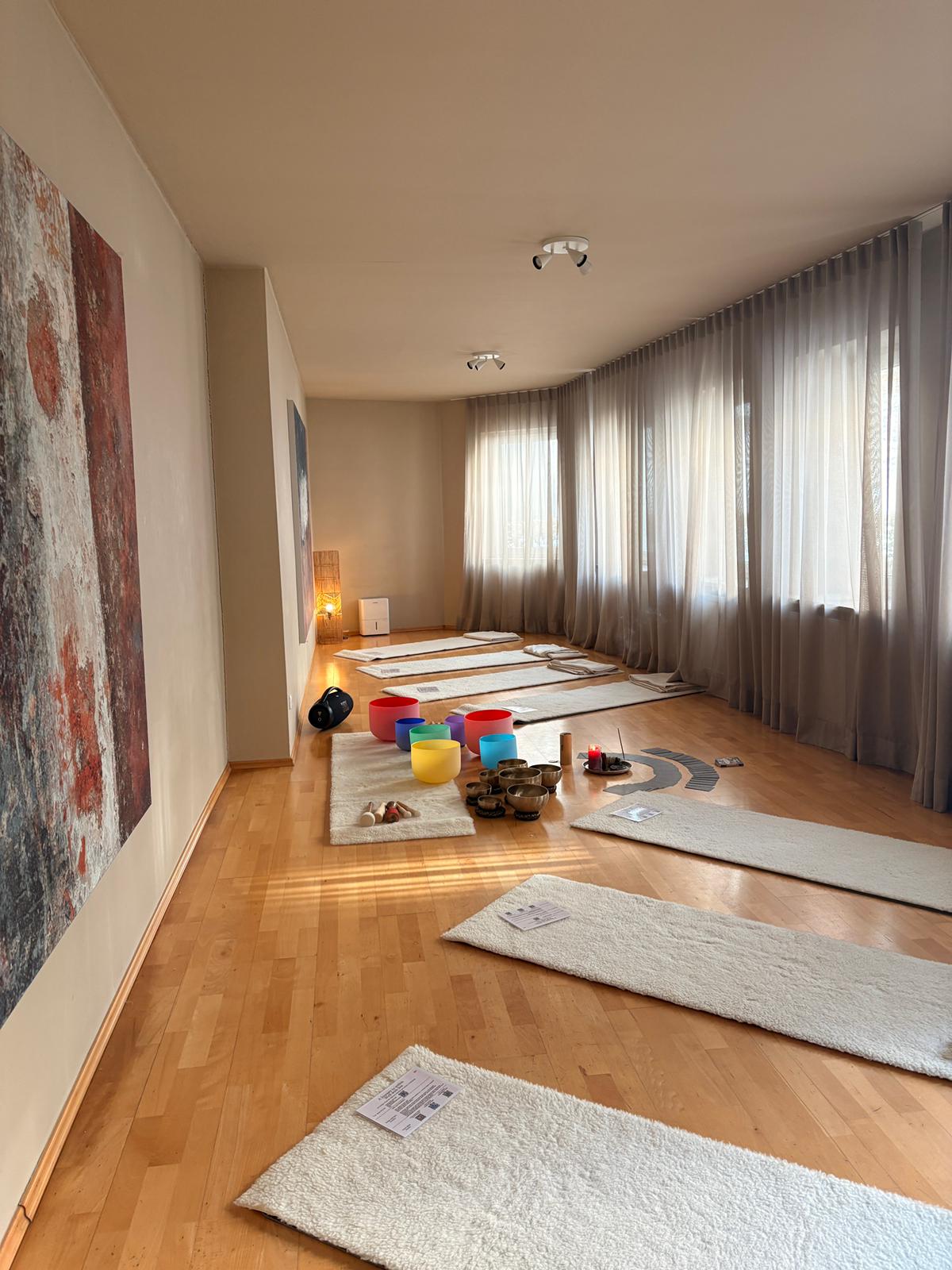
A sound bath is one of the easiest wellbeing events to run at the office: nobody needs to be fit, flexible or experienced. People lie down, close their eyes and listen. But a few details decide whether it feels deeply relaxing or awkward. I've run sound baths for teams in Munich, and this is the checklist I send to every HR team.
1. Pick the right room
- Size: about 1.5-2 m² per person lying down. A team of 15 needs roughly 25-30 m² of clear floor.
- Quiet: away from kitchens, phone booths and reception. A meeting room with a closed door works better than an open lounge.
- Light: dimmable lights or blinds. Bright overhead light makes it hard to relax.
- Temperature: slightly warm. People cool down when lying still; ask them to bring a jumper.
- Floor: carpet or wood is fine. Furniture should be pushed to the side before the facilitator arrives.
2. Choose the timing
| Slot | Pros | Cons |
|---|---|---|
| Lunchtime (12:00-13:00) | High turnout, a real reset mid-day | Tight; people go straight back to meetings |
| Late afternoon (16:00-17:00) | Calm end to the day, no rushing back | Some people leave early |
| After work (17:30-18:30) | The most relaxed, can extend with tea | Lower turnout, voluntary |
| Offsite or team day | Fits a wellbeing theme, people are already switched off | Needs a suitable venue |
Block 30 minutes before for set-up and 20 minutes after for pack-down, so book the room for about two hours in total.
3. Decide the format
- Classic sound bath (60 min): a short guided meditation, then about 45 minutes of crystal and Tibetan singing bowls, chimes and shells.
- Sound bath + breathwork (75 min): a few minutes of simple breathing first. Good for teams new to meditation.
- Half-day wellness retreat: meditation, yoga, a sound bath and tea or cacao in one morning. See how this worked for the Carly team.
- Monthly series: builds a habit and is easier to plan as an ongoing wellbeing measure.
4. Plan for everyone
- Make it optional. Wellbeing events work best when people choose to come.
- Offer chairs. Some people can't or don't want to lie on the floor.
- Ask about pregnancy and sound sensitivity. Pregnant colleagues should check with their doctor first and can sit near the door. People with tinnitus or sound sensitivity can sit further from the instruments.
- Language. If your team is international, book an English-speaking facilitator so nobody feels left out.
- No phones. Ask people to switch them off, not just to silent.
5. Brief your employees
Send a short message a few days before. You can copy this one:
"On [date] at [time] we're hosting a 60-minute sound bath in [room]. You'll lie on a mat (provided) while our facilitator plays singing bowls and other gentle instruments. No experience needed. Please wear comfortable clothes, bring socks and a jumper, and switch off your phone. Joining is optional; chairs are available if you prefer to sit."
6. Logistics for the facilitator
- Parking or loading access near the entrance: instruments are heavy and fragile.
- Building access and a contact person on the day.
- A small table for the instruments.
- A kettle, if you'd like tea afterwards.
- Number of participants, confirmed two days before.
7. Budget
| Format | Group size | My price |
|---|---|---|
| Sound bath, 60 min | up to 15 | €250 |
| Sound bath, 60 min | 16-30 | Personalised quote |
| Sound bath + breathwork, 75 min | up to 15 | €300 |
| Half-day wellness retreat | up to 30 | from €750 |
Mats and all instruments are included. As a small business (Kleinunternehmer), I don't charge VAT, so these prices are final.
8. After the event
Ask two or three quick questions the next day: How relaxed did you feel before and after (1-10)? Would you join again? Any comments? It takes a minute and gives you something to show leadership.