What they have in common
Both are vinyasa yoga. In both, movement follows the breath and poses flow into each other. Both build strength and warmth in the body.
The differences
| Slow vinyasa | Power yoga | |
|---|---|---|
| Pace | A few breaths in each pose | One breath per movement, often faster |
| Focus | Alignment, breath, awareness | Strength, stamina, heat |
| Feel | Steady, grounding | Athletic, intense |
| Best for | Beginners, intermediate, tired or stressed bodies | Experienced students, fitness lovers |
| For a beginner's body | Gentler, more time to adjust | More demanding if the poses are new |
Why I teach slow
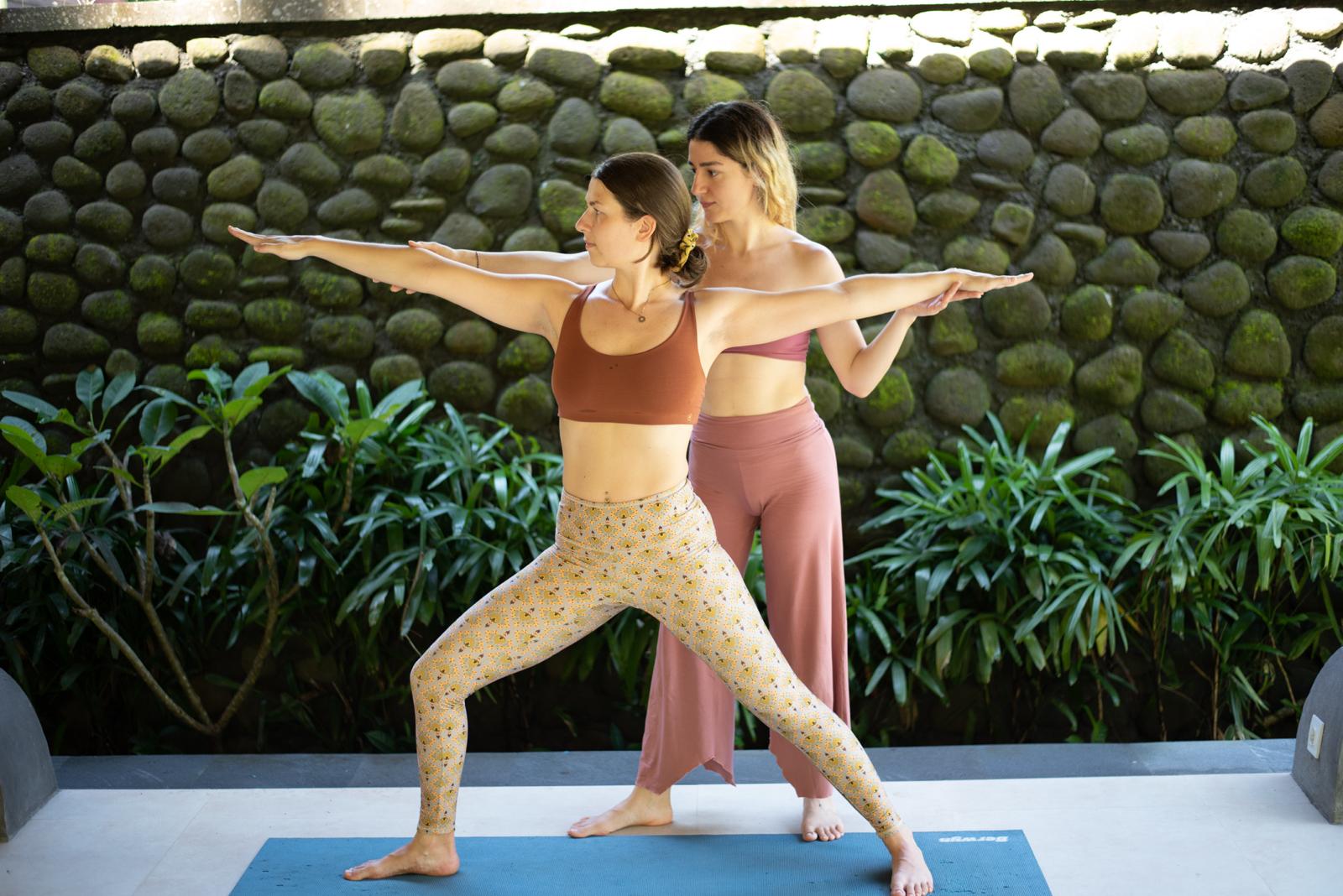
I call my style flow with patience. I build each class slowly towards one peak pose, and every step prepares the body for the next. When we stay in a pose for a few breaths, you have time to notice where you're working and where you can soften.
You'll still sweat. But the effort comes from the pose itself, not from rushing, and not from holding something for longer than it needs.
I didn't come to yoga for a workout. I came to it because it gave me calm, focus and energy, and a daily practice to come back to. That's what I want to pass on.
Who slow vinyasa suits
- Complete beginners
- People coming back after a break
- Anyone who sits at a desk all day and feels stiff
- Anyone who wants yoga to calm them down, not wind them up
When power yoga might be right for you
If you already know the basic poses and want a strong workout, power yoga can be a great challenge. Many people start slow, build a good foundation, and later enjoy both.
FAQ
Is slow vinyasa easy? Not always. Staying in a pose for a few breaths can be harder than moving through it quickly.
Will I build strength? Yes. Holding poses builds strength and stability, especially in the legs, core and shoulders.
Do you teach in English? Yes. All my classes in Munich are in English.
If slow feels right for you, I'd love to have you in class.
With love, Sena 🤍